



Ecomatik IoP Measurement Systems
The Internet of Plants (IoP) combines environmental and plant sensor technology with energy-efficient wireless communication. It enables the collection of ecological and plant physiological data without cables or manual reading of a data logger. Data is continuously collected, transmitted, and centrally visualized on our online platform, where it is also made available for download.
The compact wireless measurement units, also referred to as “nodes,” are powered by an easily replaceable internal battery (typically with a service life of > 1 year). An optional external rechargeable battery (IoP-BAT) is available on request for energy-intensive applications.
Data Transmission
Two technologies are available for wireless data transmission:
NB-IoT / LTE-M uses mobile networks (SIM-based) and enables flexible, location-independent measurements worldwide. The special SIM card is globally compatible and designed for up to 10 years of operation. NB-IoT and/or LTE-Mn etwork coverage is widely available across Europe, North and South America, China, India, Japan, Australia, and New Zealand. If there is any uncertainty regarding network availability at the specific measurement location, we are happy to provide a test node.
LoRaWAN uses a local network provided via a LoRa gateway (gateway also available through ECOMATIK, then also including local data storage and e-mail notifications). Depending on terrain and site conditions, the communication range typically exceeds 200 m and can reach several kilometers. As LoRaWAN operates on region-specific frequency bands, each sensor node is configured for a particular transmission frequency and can only be used within its designated region.
Sensors
Our IoP sensor nodes are preconfigured according to customer requirements and are ready to use as a plug-and-play system.
The IoP system integrates plant sensors (excluding Granier sensors) as well as weather and soil sensors. Continuous data acquisition enables simple online visualization and forms the basis for monitoring, automation, and process optimization in research and applied use.
Advantages of our IoP Systems
- Wireless data transmission via NB-IoT / LTE-M / LoRaWAN replaces cables and manual data reading
- Cost-efficient, and spatially flexible measurement setups and sampling design, no coupling of sensors to central data loggers, and reduced susceptibility to cable damage
- Continuous monitoring and gapless data acquisition through simple online data access
- Quick installation, flexible placement of measurement nodes, and easy system expansion
Limits of our IoP Systems
- Network coverage: For questions regarding radio coverage or network infrastructure, we are happy to advise you.
- Measurement intervals: Typically at least 15 minutes. Higher measurement frequencies (under 10 minutes) are possible as part of a customized system configuration.
- Power supply: For energy-intensive sensors, external power supply and battery solutions are available on request.
Technical data
Transmission technology | NB-IoT / LTE-M | LoRaWAN |
Network & infrastructure | Cellular-based via existing network operators, no local infrastructure required. The specialized SIM cards we use support global roaming and work worldwide. Requirements: mobile network availability at every measurement point. | Local radio network via LoRa gateway. Requirements: An internet connection at the gateway location and a suitable power supply (mains power or solar power). |
Range & coverage | Global coverage: | Approx. 200 m to several km, depending on terrain, vegetation and gateway position |
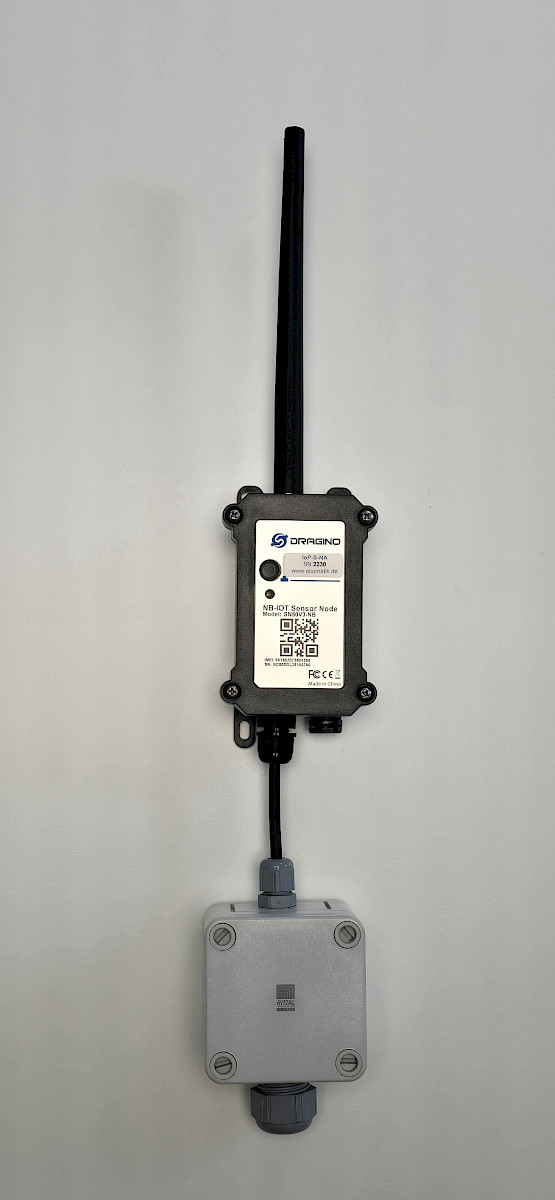
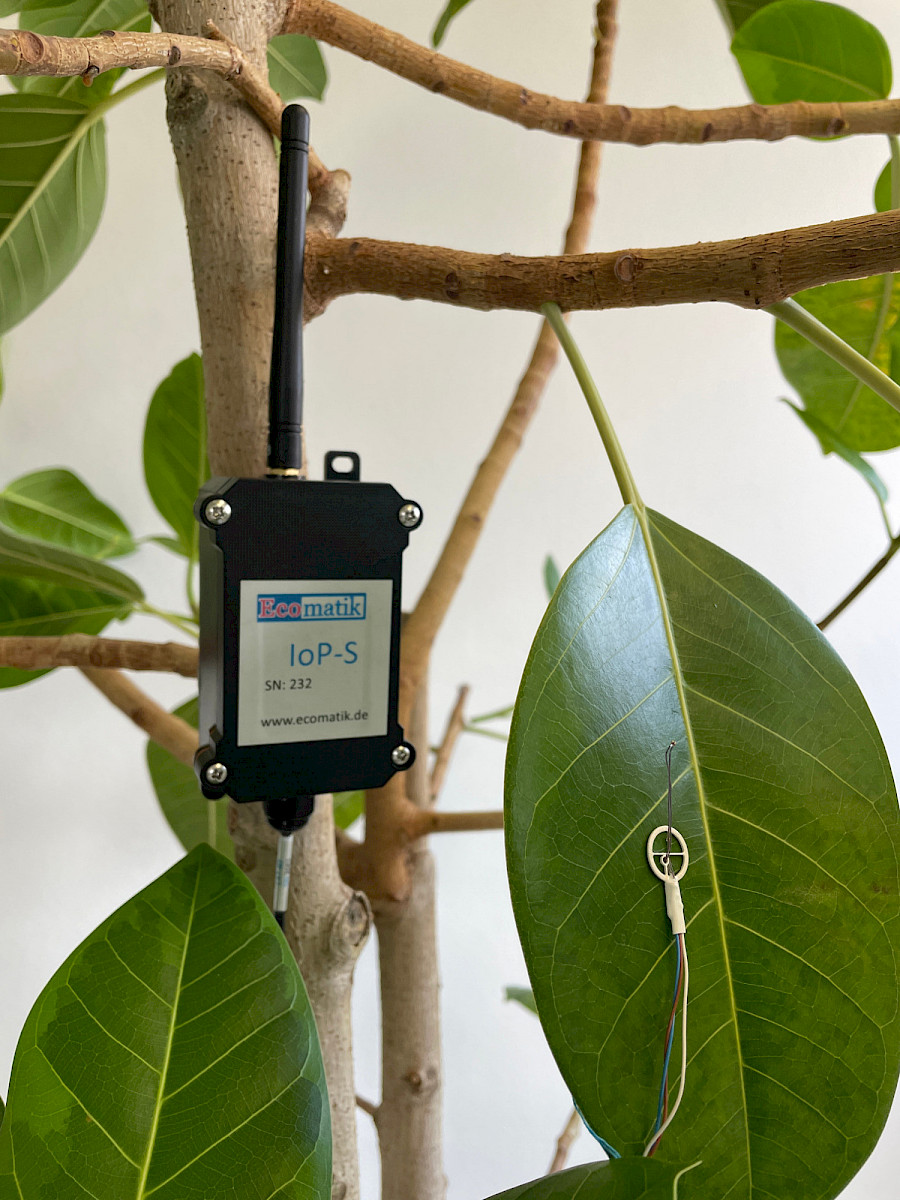
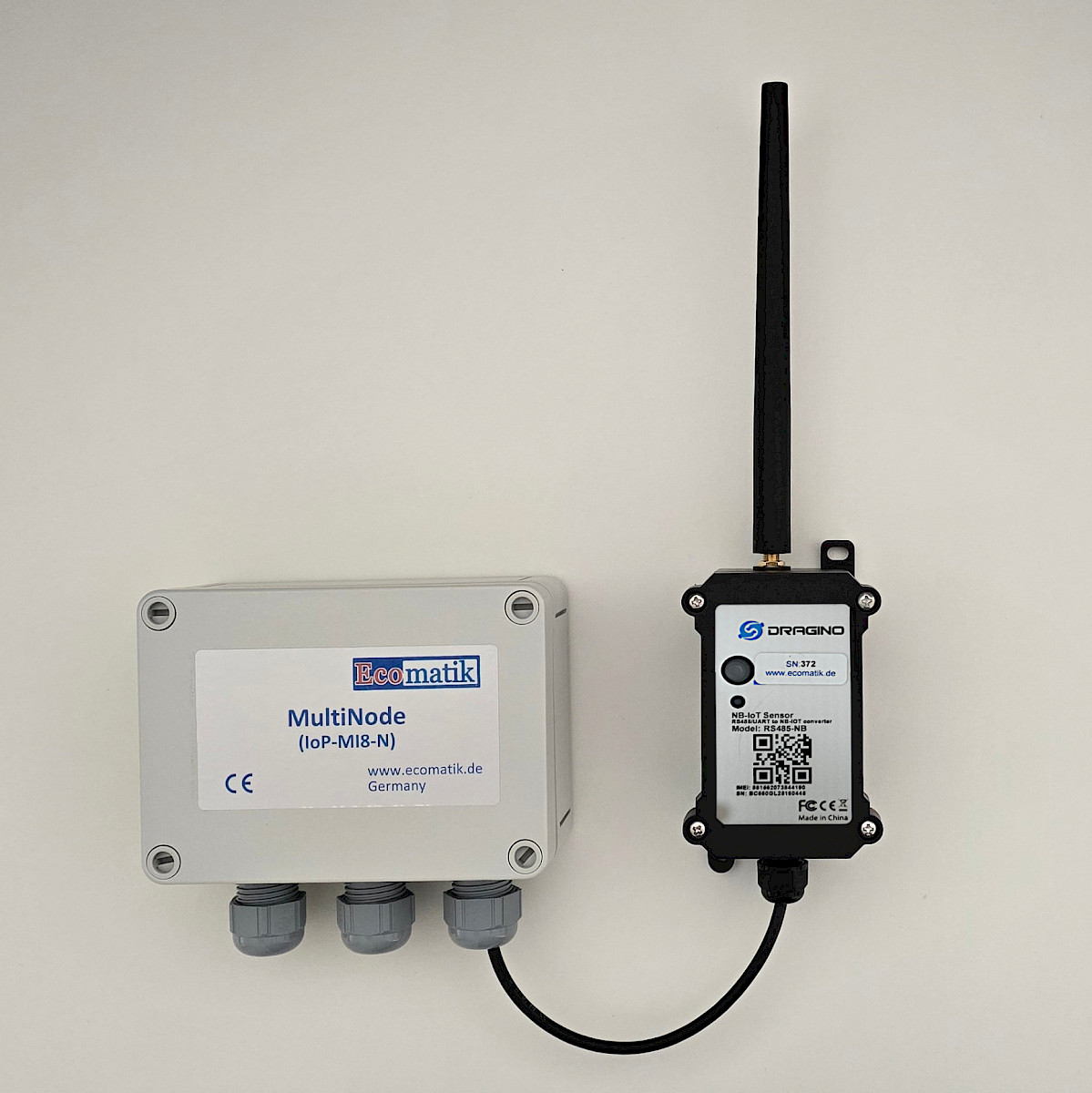
Measurement node type | IoP-S | IoP-MI8 |
Special feature | Compact measurement node for small sensor setups | Multi-interface node with 8 analog channels and digital interfaces (SDI-12, I2C) for complex measurement systems incl. special sensors |
Available radio technology | LoRa, NB-IoT, LTE-M (sim card with global roaming) | LoRa, NB-IoT, LTE-M (sim card with global roaming) |
| Measurement Interval & Transmission Interval | Standard (configurable upon request): Measurement interval: 15 minutes Transmission interval: 15 minutes for LoRa, 2 hours for NB-IoT or LTE-M | Standard (configurable upon request): Measurement interval: 15 minutes Transmission interval: 15 minutes for LoRa, 2 hours for NB-IoT or LTE-M |
Compatible sensors | Analog sensors (3 channels): Digital sensors: | Analog sensors (8 channels): Digital sensors: |
Measurement channels & interfaces | 3 analog channels; 1x I2C | 8 analog channels; 1x I2C; 1x SDI-12 |
Measurement resolution (analog) | 12 bit (noise-free) | 16 bit (noise-free) |
Accuracy (analog, absolute) | ±5 mV ±0.2 % | ±2 mV ±0.1 % |
Sensor power supply | 3.3 V and 5 V | 3.3 V and 5 V |
Battery & runtime | 8500 mAh Li-SOCl₂, typ. >1 year | 8500 mAh Li-SOCl₂, typ. >1 year (internal battery suitable for low-power sensors, e.g. dendrometers, leaf sensors, temperature sensors, and selected SDI-12 sensors). For higher-power sensors (e.g. Heat Pulse Sap Flow), an optional external battery supply is available. |
Installation | Plug & play, fully preconfigured | Plug & play, fully preconfigured |
Operating conditions | IP67, -20 to 70 °C | IP67, -20 to 70 °C |
Size & weight | 6 × 10 × 5 cm, approx. 320 g | 13 × 9.5 × 6 cm, ca. 540 g (small version without external battery IoP-BAT) |